The Future of Web Analytics in 2026: What’s Changing and What It Means for You

SimpleTrack Team
Analytics Experts
Apr 19, 2025
The web analytics landscape is undergoing one of the biggest shifts we’ve seen in a decade. GA4 replaced Universal Analytics, privacy laws expanded globally, cookies became increasingly unreliable, and consumer expectations changed. In 2026, the winners aren’t the most complex tools—they’re the ones that deliver clear insights without friction. This article explores the biggest analytics trends shaping 2026, why traditional dashboards are struggling to keep up, and how modern tools are redefining what analytics should feel like.
1. Privacy-First Analytics Is Now the Default, Not a Niche
A few years ago, privacy-first tools were “alternatives.”
Today, they’re becoming the new standard.
Driven by:
GDPR updates
CCPA/CPRA enforcement
New regional laws in 2025–2026
Browser-level privacy changes (Safari, Firefox, Brave, Edge)
Consumer distrust of large data platforms
The next generation of tools store less data, use cookieless tracking, avoid IP addresses, and eliminate cross-site identifiers.
Modern analytics = Insight without surveillance.
Tools like SimpleTrack, Plausible, Fathom, and Umami are leading this shift.
2. Simplicity Is Becoming a Competitive Advantage
Users are exhausted by complex dashboards.
GA4’s interface, for example, has become a meme in the analytics world.
In 2026, the most-loved tools share the same qualities:
clean
fast
instantly understandable
mobile-friendly
visual
minimal menus
Analytics no longer require tutorials, certification videos, or studying documentation.
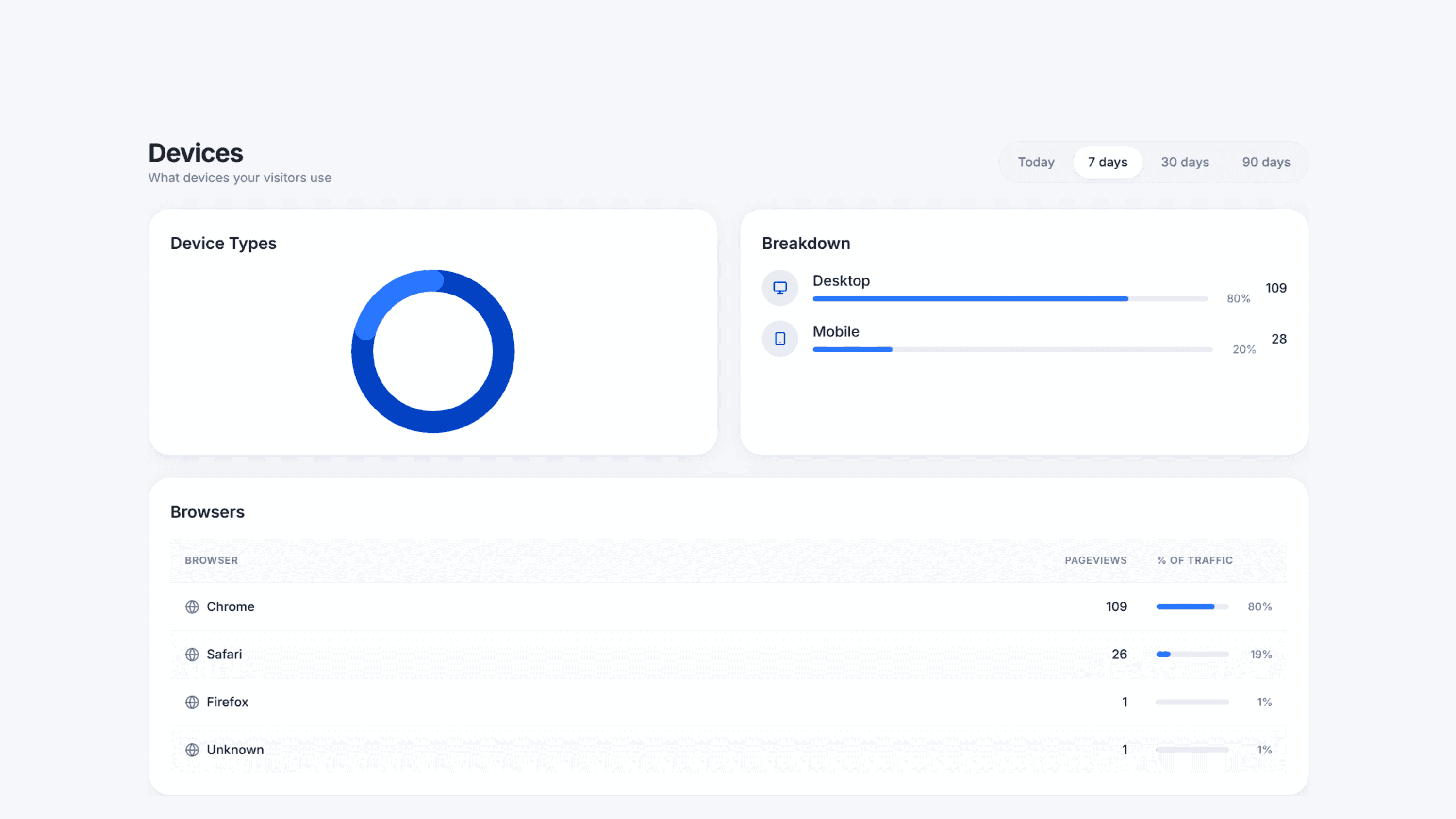
People want to check traffic the way they check the weather: one glance, instant clarity.
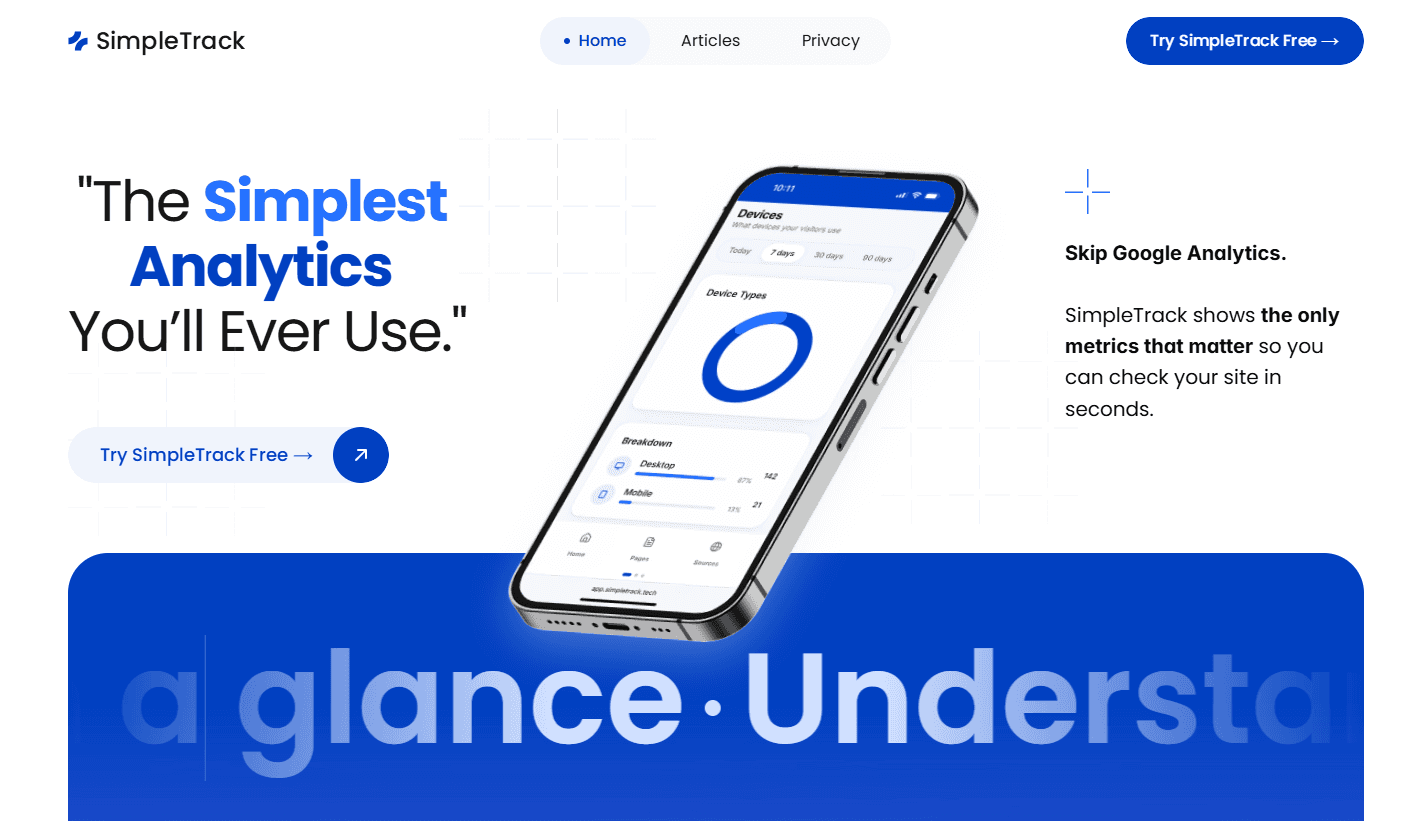
This is exactly where SimpleTrack positions itself.
3. AI Is Improving Insights (But Not Replacing Analysts)
AI in analytics isn’t about “auto-running your business.”
Instead, it’s helping users understand patterns faster.
AI is used for:
spotting unusual traffic spikes
detecting patterns you miss
summarizing week-over-week changes
identifying high-converting pages
predicting trends
It’s not about giving control to AI—it’s about surfacing insights you actually act on.
4. Mobile-First Dashboards Are Becoming Non-Negotiable
In 2026, more users check analytics from their phone than their desktop.
People expect:
full dashboards on mobile
real-time updates
event tracking on the go
fast load speeds
clear graphs on small screens
This is one area where older tools fall behind.
New tools (like SimpleTrack) are built mobile-first from the beginning.
5. Real-Time Analytics Is Now Expected
Nobody wants to wait minutes (or hours) to see what’s happening right now.
Modern tools prioritize:
instant updates
no sampling
no data delays
live active visitor counts
real-time page performance
This helps founders, marketers, and creators respond faster and move quicker.
6. Lightweight Scripts Are Critical for SEO and Performance
Slow analytics scripts can hurt your:
Core Web Vitals
Search rankings
User experience
Conversion rates
In 2026, the best tools ship tracking scripts under 1–4 KB.
Light, fast, invisible.
Analytics shouldn’t make your website slower—period.
7. The Line Between Product Analytics and Web Analytics is Blurring
Users want to track:
website traffic
app activity
funnel performance
events & goals
onboarding
conversions
…all without switching tools.
SaaS founders especially are looking for unified dashboards that are simple—not enterprise-level complexity.
Final Thoughts: What This All Means for You
The future of analytics in 2026 is clear:
private
simple
fast
mobile-first
no cookies
no learning curve
AI-assisted
lightweight
If you feel overwhelmed by traditional dashboards—or if you want analytics that respect privacy without sacrificing clarity—the new generation of lightweight tools is the best way forward.
Tools like SimpleTrack are designed for this new era: delivering insight without complexity and clarity without compromise.