The Best Google Analytics 4 Alternatives in 2026 (Simple, Fast & Privacy-Friendly)

SimpleTrack Team
Analytics Experts
Dec 25, 2025
Google Analytics 4 has been the dominant analytics tool for the past few years, but its complexity, confusing UI, and heavy privacy requirements have pushed many website owners to search for cleaner, faster alternatives. In 2026, more creators, startups, and personal website owners want something lighter—something that doesn’t require a certification to understand basic traffic trends or pop up cookie banners everywhere. This guide breaks down the best GA4 alternatives for 2026, focusing on tools that prioritize simplicity, privacy, and ease of onboarding.
Why People Are Leaving GA4 in 2026
GA4 promised a modern analytics experience, but many users still struggle with:
A steep learning curve
An overwhelming number of reports and settings
Confusing navigation
Event setup complexity
GDPR headaches and cookie banners
Slow dashboard performance
For small businesses, indie hackers, and creators, GA4 is simply too much.
Top GA4 Alternatives in 2026
1. SimpleTrack (Easiest & Fastest for Beginners)
Best for: creators, startups, blogs, landing pages
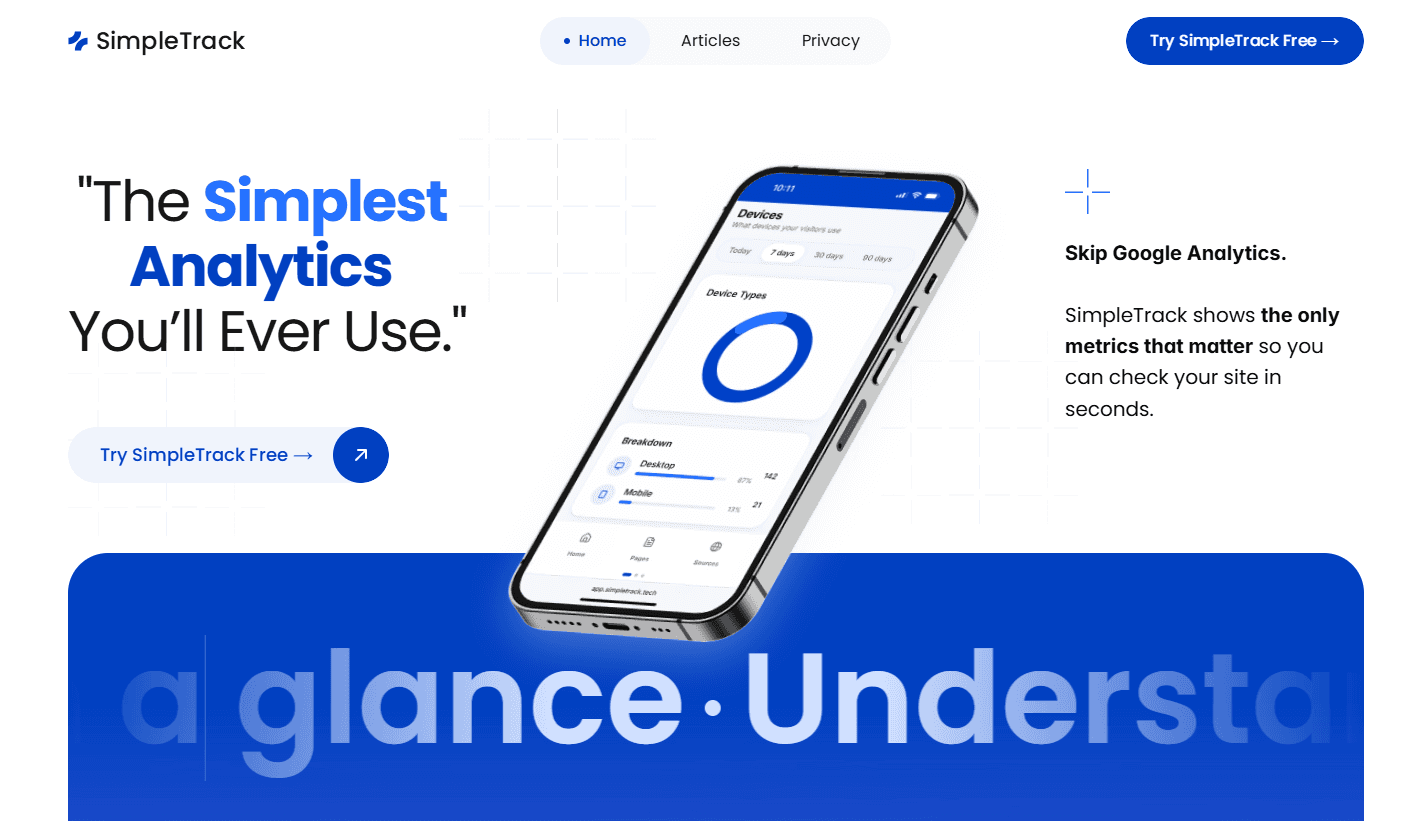
SimpleTrack is a lightweight analytics tool built for people who want to instantly understand their traffic without digging through layers of menus. It runs using a tiny script, respects privacy, and requires zero cookie banners for GDPR compliance.
Why people choose it:
Clean, instantly readable dashboard
Real-time traffic insight
No cookies, no tracking banners
Extremely simple onboarding
Works great for Framer/Webflow/Notion
2. Plausible
Best for: privacy-focused businesses
Plausible is a long-time favorite among users who want simplicity and transparency. It’s open source, lightweight, and a solid alternative if you want something serious but not overwhelming.
Pros: GDPR-friendly, simple UI, trusted community
Cons: Limited event depth, can feel basic for power users
3. Fathom Analytics
Best for: small-to-mid-sized websites needing fast dashboards
Fathom is known for speed and elegant design. It offers clean conversion funnels and uptime monitoring.
Pros: fast dashboards, privacy-first
Cons: slightly higher pricing, fewer custom reports
4. PostHog
Best for: product teams that need deep analytics
PostHog is powerful—session replay, feature flags, product analytics, and more.
Pros: extremely detailed
Cons: overwhelming for casual users, requires setup time
5. Umami Analytics
Best for: open-source enthusiasts
A self-hosted GA4 alt that gives you full control while keeping things simple.
Pros: customizable, open source
Cons: requires hosting & maintenance
Which Alternative Should You Choose?
If you want:
Maximum simplicity and instant understanding → SimpleTrack
Open-source transparency → Plausible or Umami
Deep product analytics → PostHog
Clean visuals + speed → Fathom
GA4 is still powerful, but it’s no longer the default choice—especially not for creators or small teams.
Final Thoughts
2026 is the year website owners prioritize clarity over complexity. If you’re tired of GA4’s confusing menus and want something you can open and understand in seconds, switching to a simpler alternative is the easiest improvement you can make to your workflow. Simple, privacy-friendly analytics tools are finally mainstream—and worth adopting.